David Aron taught himself pixel art at 3:30 in the morning. Oliver Joyce made Swords and Sandals. Together they're building Lair of the Leviathan, an open-world turn-based RPG in the spirit of Ultima and Pool of Radiance. We talked about engines, paperdolls and quests that don't feel like chores.
David, the press release says you taught yourself pixel art as a stay-at-home dad, and back in 2024 you told an interviewer you were working on Lair from 3:30 in the morning, before the rest of the house woke up. What was the first thing you made in those early hours that made you think this hobby could actually become a real game?
David:
At first I started learning gamedev just to give myself something productive to do as I had previously been working in a university research position here in Japan. It started purely as a hobby. I never even expected to make a full game, I just started hoping to enjoy the process and in the back of my mind I had always wanted to make a ‘Goldbox’ like game. It was a slow process and it took me a few years to be able to even draw anything that remotely looked like what I had in my mind!
Eventually I got to the point where I started posting my art on social media. I wasn’t expecting much but people responded really positively. It really was as simple as that, just checking the reactions, being surprised at the number of ‘likes’ and such and seeing whether I had enough of a positive reaction to make it worthwhile as something more than a hobby.


I continued that approach as I started developing the game before I had even launched the Steam page. Posting screenshots, checking how people responded and the numbers and that really just gave me the confidence that it might succeed and that I was on the right path.
Oliver, your Flash games reached hundreds of millions of players, and you’ve said that after every release you still spend a week patching Swords and Sandals code from 2006, ’the Indiana Jones of coding’ in your own words. What’s one lesson from the Flash days that ended up shaping Lair?
Oliver:
Ha, you’ve done your research! I definitely feel like a ‘code archaeologist’ sometimes, digging through ancient and dusty codebases. In many ways, Lair is very different from all those old Flash games in terms of its scope, the complex architecture and so on, but there’s definitely lessons I take from the old Flash games. Specifically, in those old Flash games you didn’t have long to grab people’s attention.
Out of necessity, most of the old Flash games had very little in the way of bloat, they just took you straight to the action. I’ve tried to design Lair in such a way that while there’s tons of complexity, you don’t see 8 minute long cutscenes, NPCs don’t bombard you with walls of text, combat is (relatively) fast and visual.

The press release says you two solo developers teamed up because ’nobody else was willing’ to make a game like this. One of you is on his first game, and the other is a Flash-era veteran who calls an epic 90s-style RPG his ‘ultimate goal’. How did you actually find each other, and when did you know the partnership would work?
Oliver:
David had been working on the game completely solo for the best part of a year before I stumbled across a post he did on Reddit just explaining his story. It was that amazing overland map that really got me interested, but then when I read that he was a stay-at-home dad building this ambitious game as his first project, I messaged him with some words of encouragement and just to offer advice along the way. We started talking and realised we actually had a ton of things in common and even a shared vision for ‘our perfect game’.

I’d been tinkering with a big RPG of my own for years, mainly just in the design phases, and I realised it was basically what David was trying to achieve, and so I proposed we teamed up on the game. It was a big gamble for David as he really didn’t know me outside of some obscure Swords and Sandals games (none of which have the big scope of Lair), but I was fortunate he trusted me enough with his project!
Because our skills are pretty complementary (code and design), I knew pretty early it could work, but you definitely have to learn how the other person works too! I can be pretty haphazard with how I build things, I develop very fast and often go the “Close enough is good enough!” route which guarantees games will ship, but can often mean games lack that extra layer of polish. David’s much more meticulous and has a great eye for detail and he’s been great at challenging me to go that little bit further, to not settle for less than what the game requires (or deserves!)
In 2024 the party was fixed: set characters and classes with their own stories and quests, and you could only change their names. Now the Steam page promises a party you create entirely yourself, with ’no pre-made companions to bore and antagonize’. What changed your minds, and what did you have to rebuild to make it happen?
David:
I think the major thing was that after Oliver came on board it really opened everything up. Originally I was constrained by my lack of programming skill but Oliver is at the point where he can pretty much make whatever he wants. So we discussed things and thought offering players the freedom to create whatever characters they wanted was more in line with the classic approach and would offer more freedom to the players.

Oliver:
Gradually the scope of the game has grown pretty dramatically over the last two years, mainly as the quality of the editor tools I’ve been building improved. At first they were just simple widgets I could use to help David create things, but the more powerful the tools became, the more ‘cool stuff’ we’ve been able to add to the game.
Lair has a paperdoll system where the hundreds of items you collect, down to weathered old wizard hats, show up on fully animated pixel-art figurines, and Oliver, you’ve admitted it’s a lot of work behind the scenes. What was the hardest part of making every piece of gear actually appear on your heroes?
David:
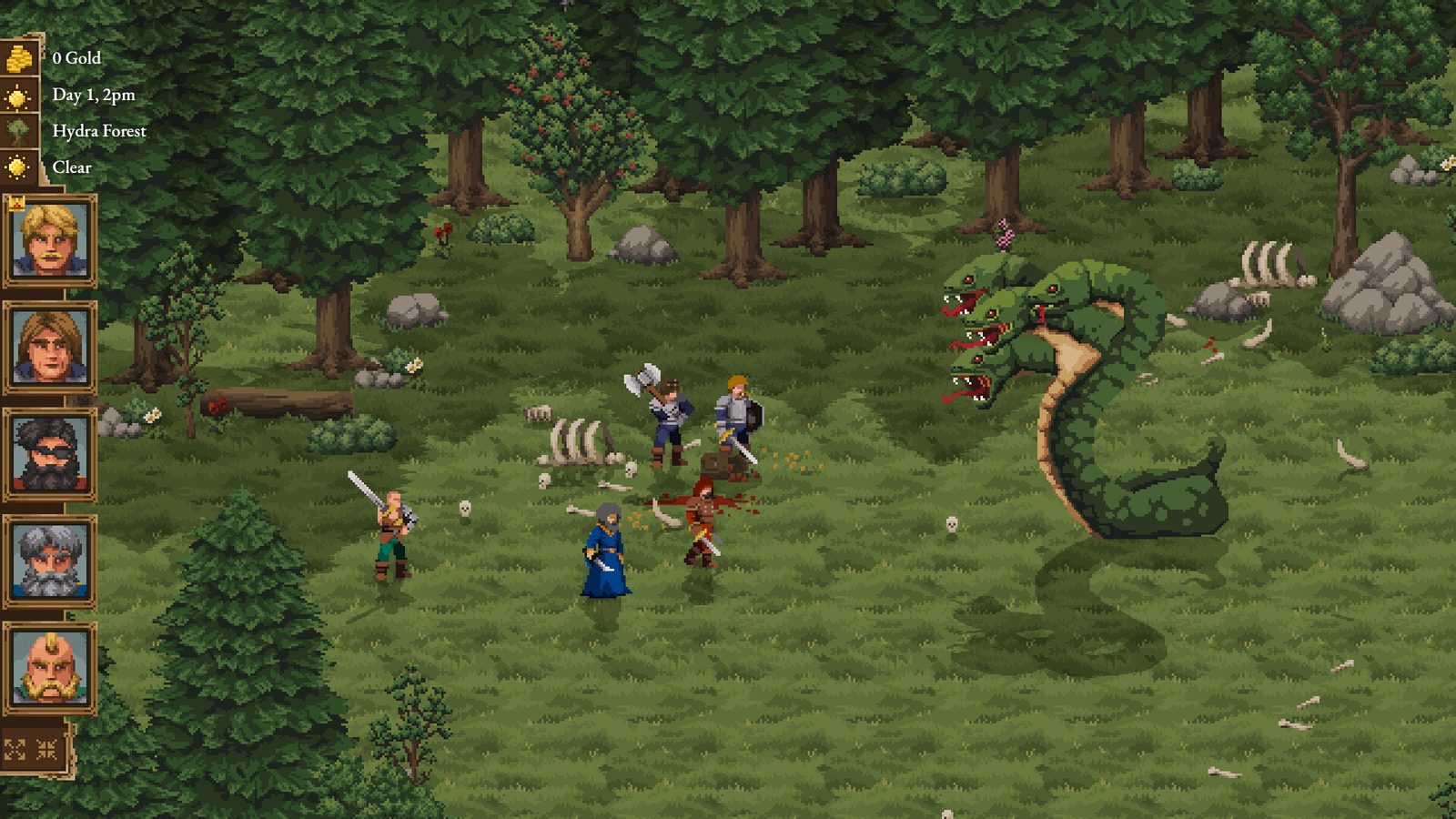
The player figurine system is crazy! I didn’t want just a standard figurine with weapons stuck on, I wanted each type to walk differently, to have different types of armour, different attack animations depending on the equipped weapon. That means drawing all animation frames for each type of player figurines depending on the weapon ’type’ (we currently have 8). It’s thousands of animations of work for each but it means each party member not only looks different depending on the weapon or armour but they also move differently and will attack differently too. All gear is hand drawn on separate layers individually frame by frame for each of the figurine types.
Oliver:
The real challenge from here was definitely at David’s end. Some of those animations have so many layers! From my end, it wasn’t too difficult. I’m using Godot which has this concept called ‘Nodes’, and you can use them easily to replicate the pixel layers in David’s Aseprite animation tool, and have each layer play out individually quite easily. You then can colourize certain layers (clothes, head, hair and so on) with simple color replacement shaders for variety, and then all you’re really doing is turning on and off layers depending on what gear that hero has equipped.
In the old days that would be pretty performance intensive but on modern PCs you can just have many instances of these hundred layer animations with shaders and shadows, all over your map with zero slowdown! (Try doing that in Flash!)
Compared to the complexities of data management, pathfinding and quests and encounters, this one wasn’t too hard!
An engine switch at some point made your first trailer look less and less like the game you were actually making, and Oliver, you’ve since shown off a powerful world editor built right into the game. Which engine did you move from and to, and what made the switch worth starting a lot of things over?
Oliver:
Initially, David was using Construct I think. I was actually pretty impressed with what he’d been able to achieve with it, he had camera movement, little speechbubbles on NPCs, basic combat! When I joined, I’d been using Godot (a free open-source game engine that’s become really popular lately) for a number of years.
It was no doubt challenging for David to see us have to start again code-wise but I quickly realised that the way he was doing things would have been really hard to scale up. It’s taken me over two years to build all the editor tools, and so I imagine there would have been some frustration along the way seeing things seemingly go backwards, but the end result is we can very quickly build maps, encounters, monsters, the works. It’s a much more ‘visual’ way to build things now and we can work together and edit maps concurrently.
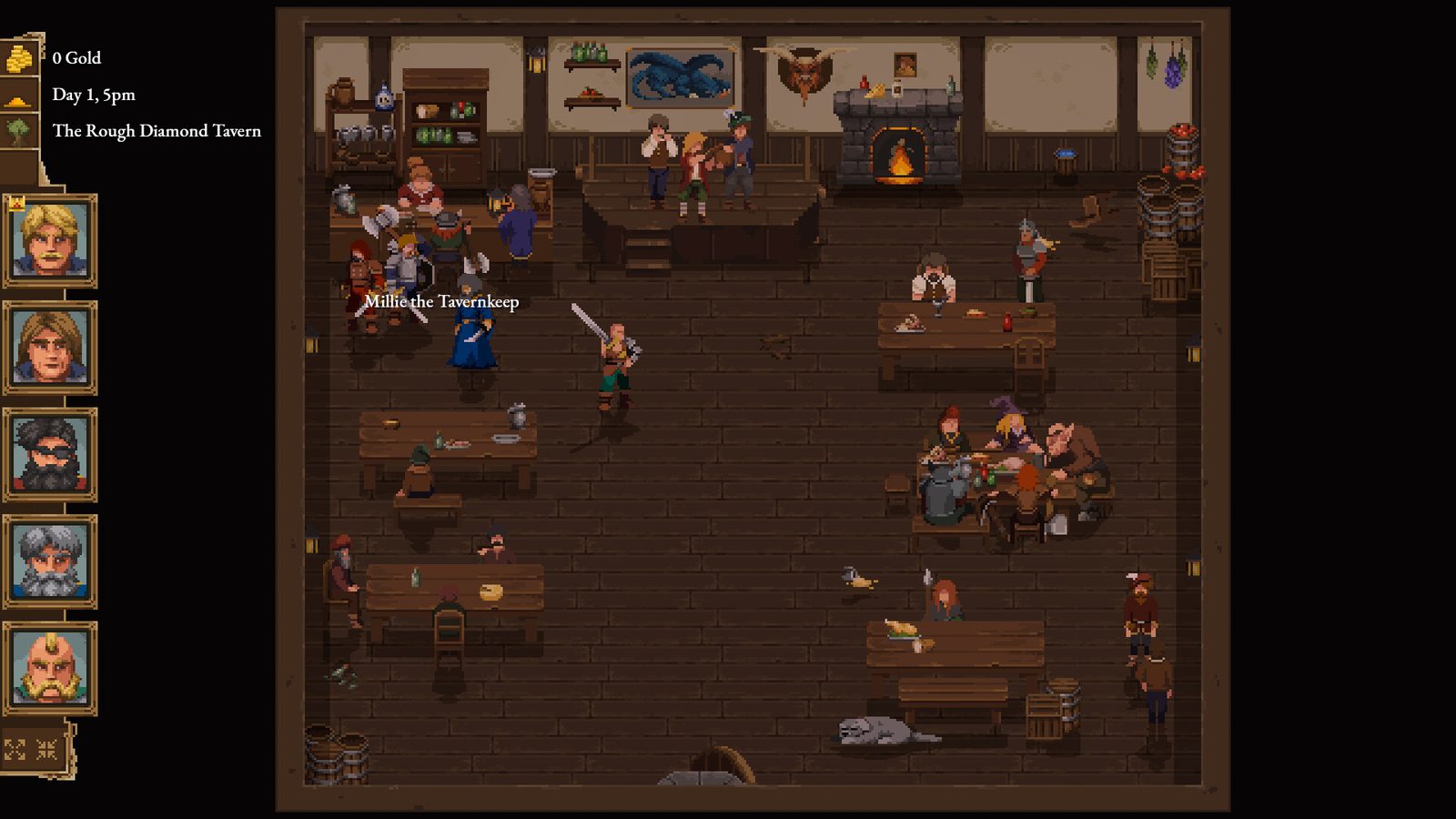
Everything you need for the game (except the art itself) can be built in the editor, so much so that I’m considering bringing in mod support and granting anyone access to the editor to make their own adventures at some point after the game launches.
In your September devlog you said you were ‘about a year away from Early Access’, and you’re still filling Ormande with farms, underground caverns and orc-raided villages. With a hand-crafted open world where players can ignore the main quest entirely, what do you most want to learn from your first Early Access players?
Oliver:
It’s taken ages for us to finally reach the ‘fun part’ of the game building process, where we get to play with all the editor toys I’ve built. And so all of that is, as you say, filling the world with locations and quests for the player to explore and discover. This process though, it’s all actually pretty new to us. We have the tools now but there’s a certain skill in quest design.

You look at a lot of those classic RPGs (and even many of the MMOs like World of Warcraft etc) and most of the quests you see are fetch quests (‘get me the Sword of MacGuffin’) and collection quests (‘go collect ten mammoth tusks’) and while I think that’ll still be at the heart of Lair, I’d like to be able to at least ‘window dress’ that a little better. So you’re still doing these simple quests but they feel a bit more imaginative in terms of how they’re written. Crimson Desert does a great job of that, the quests are often pretty simple mechanically but they feel really varied.
So from Early Access players, we want to learn from players what felt like fun quests, and what felt like chores. Once Early Access kicks in, we’ll be hard at work on the main questline and we want those quests to feel like the most complex, the most interesting part of the game. That’s the best place for us to flex our metaphorical muscles in terms of using all that we have learned in that final push through to the game’s proper launch.
David:
I think for me I know a lot of people look at early access as if buying an unfinished product but I want to offer something as polished and with enough content to make it worthwhile. With the size of the game there will no doubt be bugs and things that need changing but I want to be sure to offer people enough quality content to be worth their time.
We have plans to expand the world, offer new dungeons and areas to explore, new mechanics and things to do in the world (Oliver had some cool ideas for little mini game ideas) and just build it out into something much larger with feedback from the community.